The house
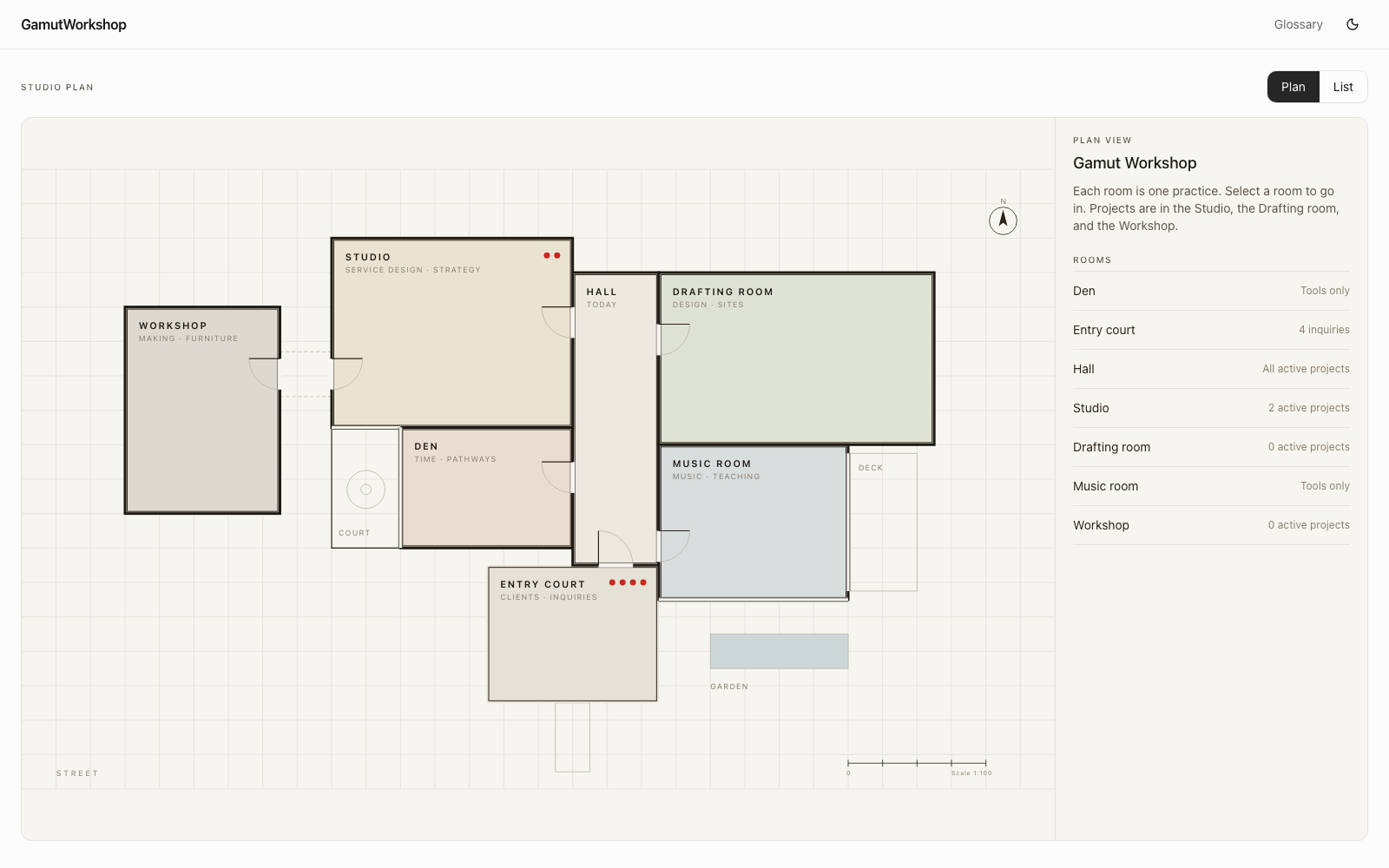
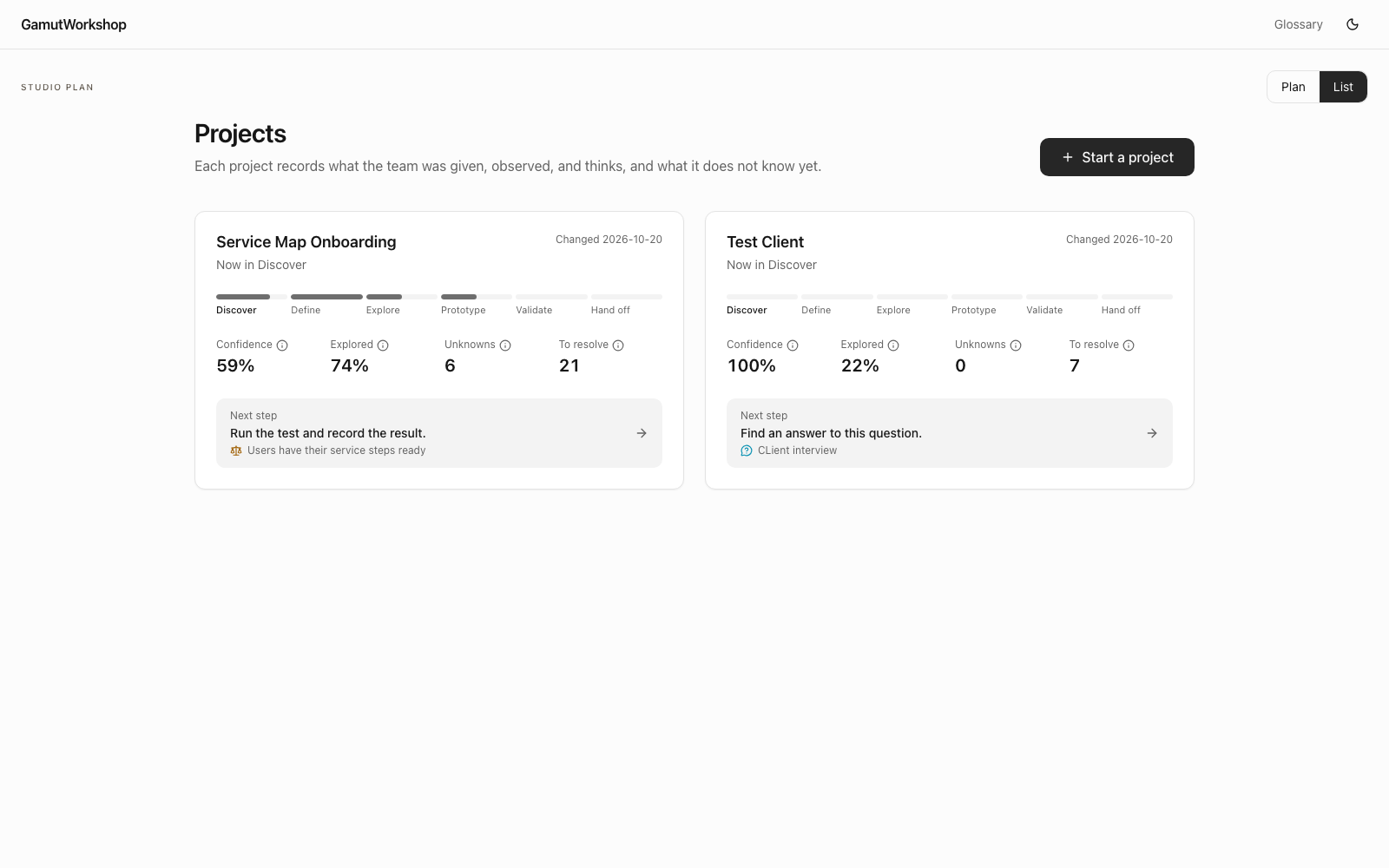
Each room is one practice. The entry court takes new inquiries. The hall shows the next step for every active project. The studio holds service design and strategy. The drafting room holds visual design, type, colour and site themes. The workshop holds furniture design. The music room holds practice and teaching tools. The den holds time.
Measure understanding, not work
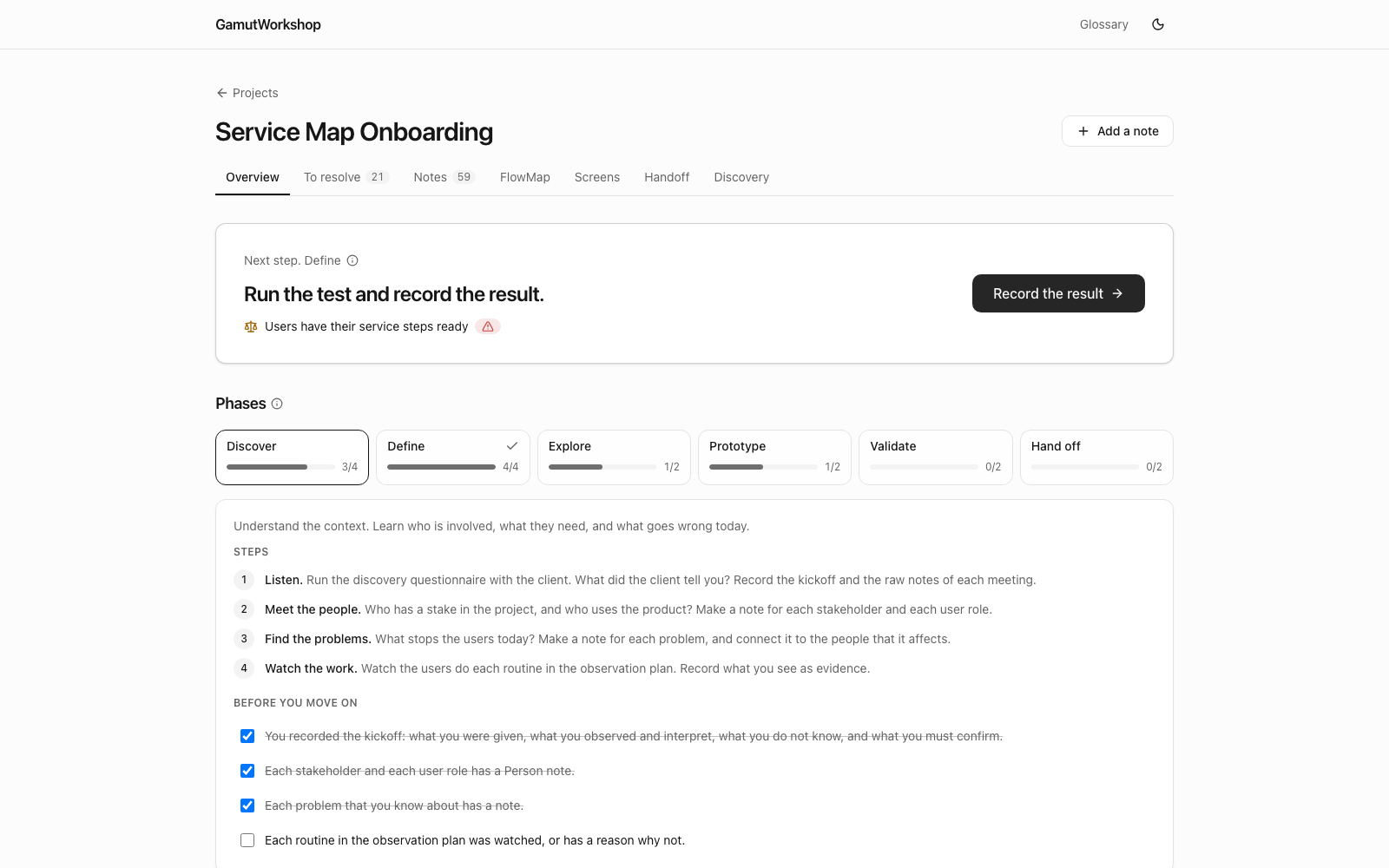
- Show one next step at a time.
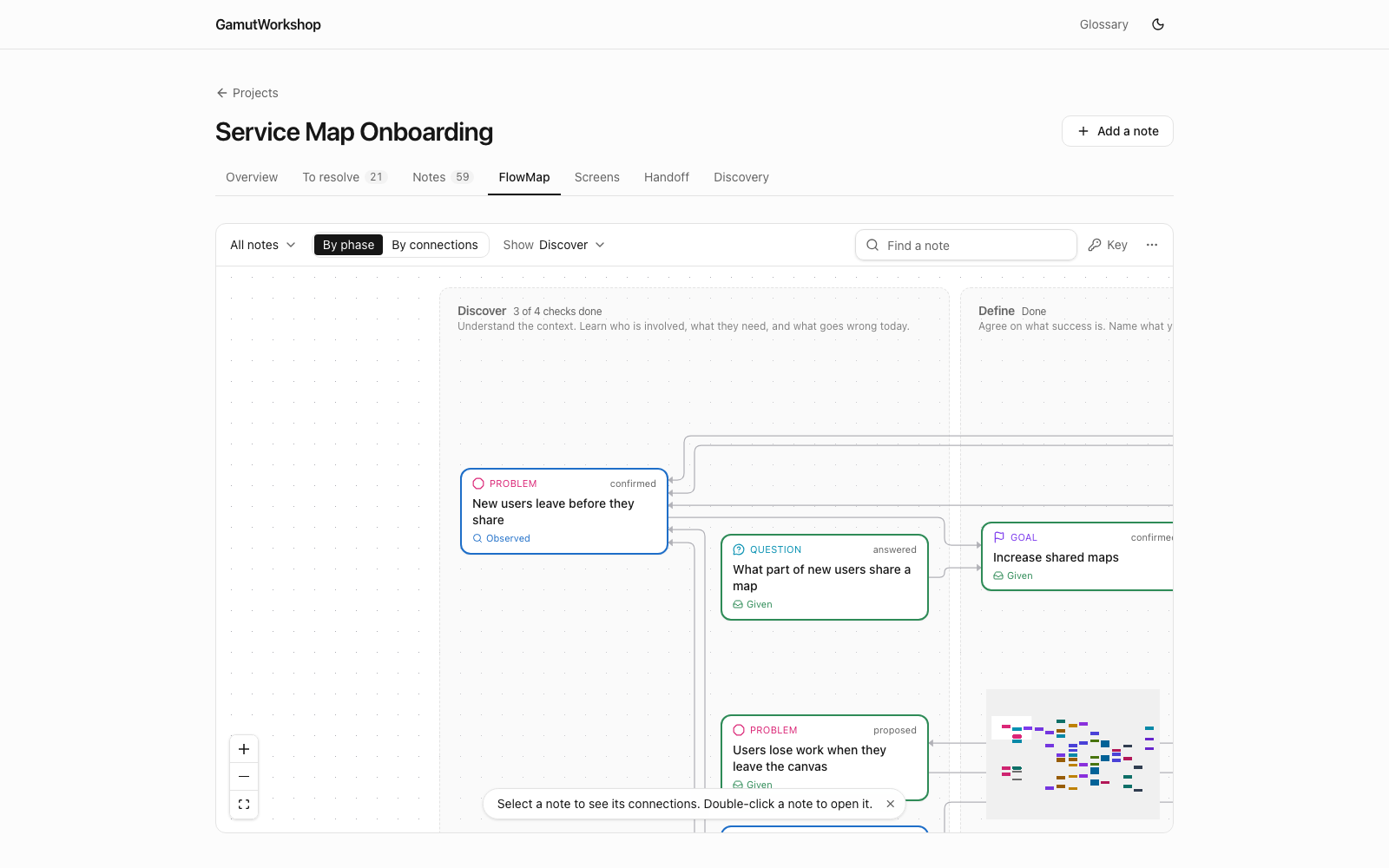
- Record an unknown as progress. Uncertainty is data.
- Give a disproved assumption the same message as a supported one.
- No tasks, due dates, streaks or leaderboards.
- Keep the phases open. A team can start at any phase.
How I built it with AI
I wrote the requirements and the product principles first. Claude Code wrote most of the code and the tests. I made the decisions and reviewed the result.
Every session follows the same protocol. At the start, the AI reads the rules, the decision log and the last session note. At the end, it runs the tests, records new decisions with a reason, and adds a session note. The decision log now holds 143 decisions. When a decision changes, the old one is marked as replaced, not deleted.
Each screen change is checked against the Laws of UX. When a law and a product principle disagree, the principle wins, and the session note records why.