What it does
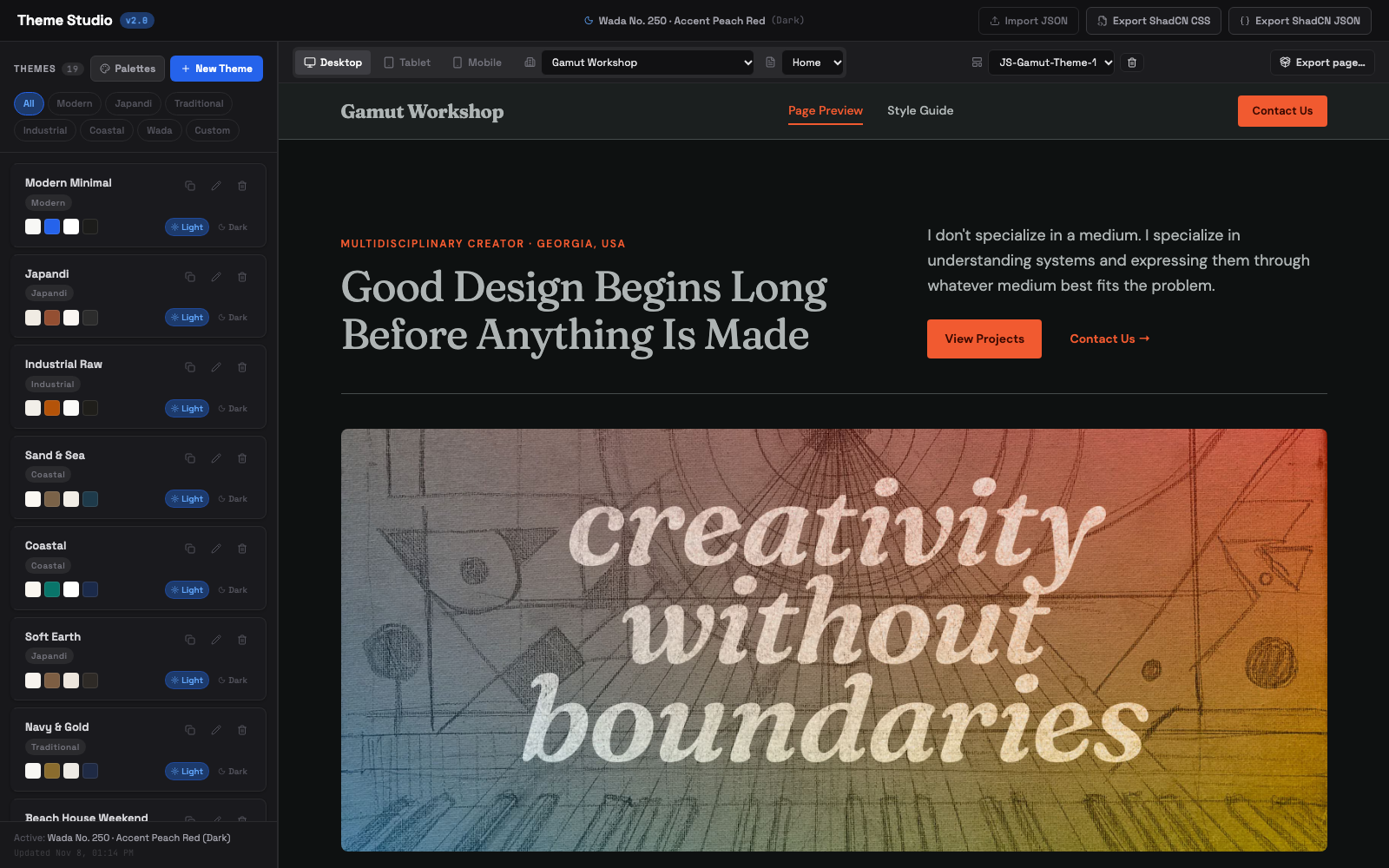
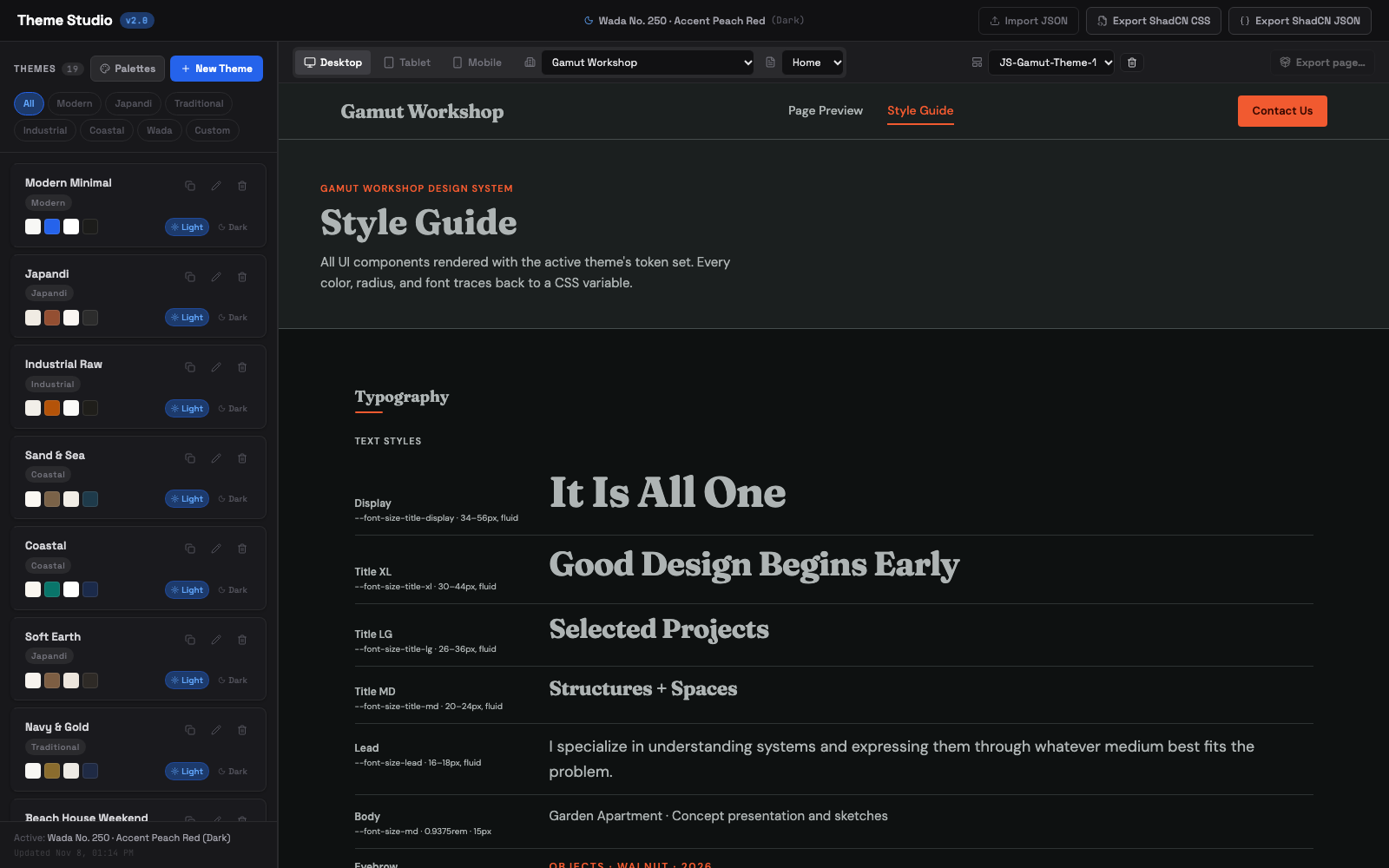
- Previews a theme live on a full sample site and a style guide, at desktop, tablet and phone widths.
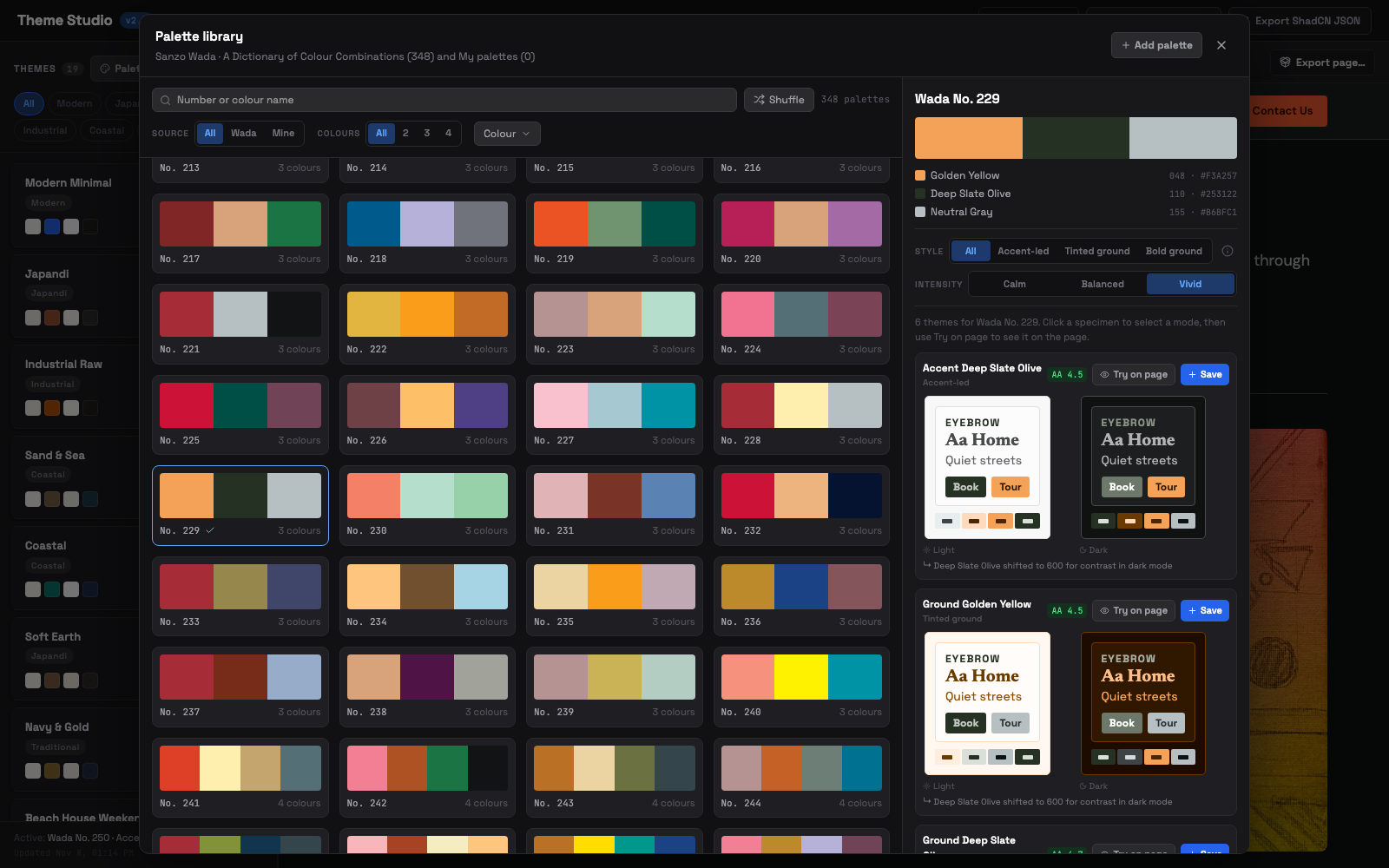
- Builds themes from the 348 palettes of Sanzo Wada's A Dictionary of Colour Combinations (1933–34), and from my own palettes. Each palette suggests several themes and checks the contrast.
- Offers 30 block types, from heroes and features to pricing, FAQ, events, menus and timelines, each with variants.
- Exports pages and blocks as real code: ShadCN CSS and JSON, React and Tailwind, or HTML and Tailwind.
How I built it with AI
Each feature started as a written plan: the export plan, the blocks plan, the palette library plan and the site-builder plan. Each plan lists its open decisions, and I accepted or changed them one by one before any code was written.
Claude Code then did the tasks in order and stopped after each one for my review. Snapshot tests compare every export with a saved baseline, so a change I did not intend shows up at once. I checked each visual change in a browser, because the tests do not see the layout.
The project rules live in one file that every session reads first. Examples: keep the app launchable from my dashboard, never remove a feature without asking, and write every label in plain, simple English.